To redesign your master bedroom for better functionality, start by evaluating your space and needs—measure dimensions and identify light sources. Maximize storage with under-bed containers and wall-mounted shelves. Choose a furniture layout that promotes easy movement, positioning the bed as the focal point. Incorporate personal style with colors and decor that resonate with you. Enhance comfort using soft colors, plush bedding, and calming elements. Keep going to explore more tips for a beautifully functional space.
Assessing Your Space and Needs
How well do you know your master bedroom’s layout and your personal needs? Start by measuring your space—length, width, and height.
Identify the natural light sources and any architectural features that might influence your design.
Think about how you use the room daily. Do you need a cozy reading nook or a workspace?
Consider your lifestyle; if you enjoy sleeping in, make sure your bed’s positioned for maximum comfort.
Reflect on your personal preferences in colors and styles.
This assessment helps you create a bedroom that truly feels like your sanctuary, tailored to your unique habits and tastes.
Maximizing Storage Solutions
While you may have a beautiful design in mind for your master bedroom, it’s essential to incorporate effective storage solutions to keep your space organized and clutter-free.
Consider using under-bed storage containers for seasonal clothing or extra linens. Wall-mounted shelves can display decor while keeping floor space open.
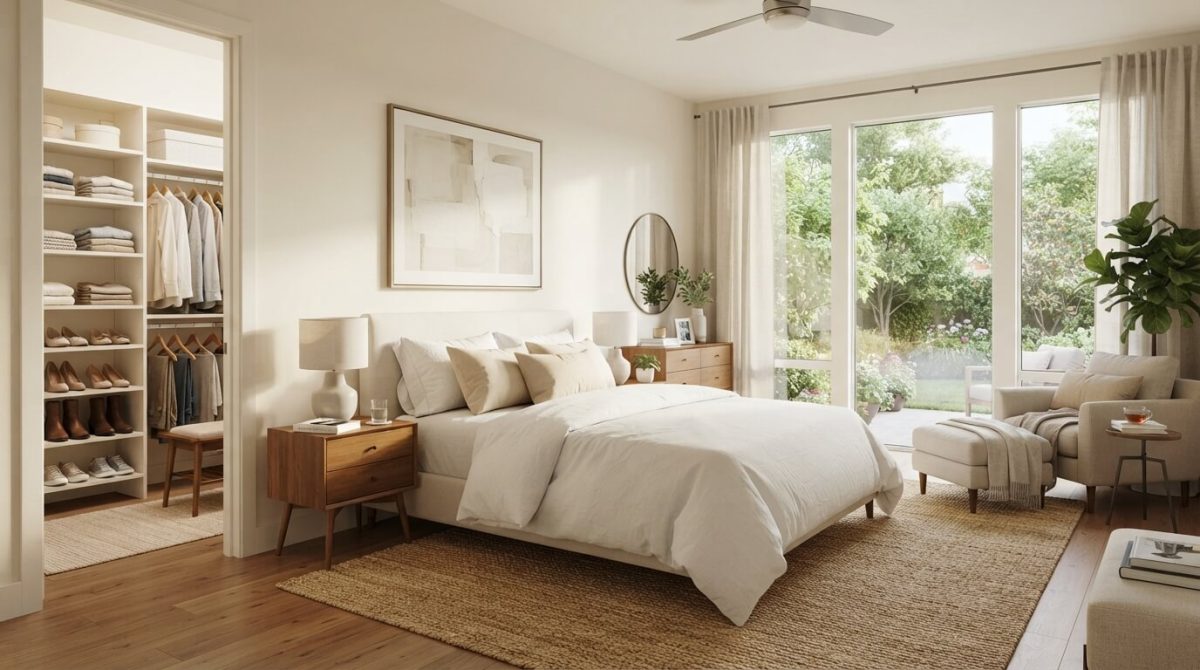
Utilize multi-functional furniture, like a storage ottoman or a bed with built-in drawers. Don’t forget about closet organizers—add hooks, baskets, or dividers to maximize every inch.
Choosing the Right Furniture Layout
When you’re designing your master bedroom, choosing the right furniture layout is essential for both functionality and aesthetics.
Start by measuring your space to determine what fits comfortably. Place your bed as the focal point, ideally against the longest wall. Consider walkways—leave enough space for easy movement. Nightstands should be within reach, and don’t forget about additional seating if space allows.
Arrange furniture to promote conversation and relaxation, avoiding clutter. Use multifunctional pieces, like storage ottomans, to maximize space.
Experiment with different configurations until you find one that feels right, balancing comfort and flow in your personal sanctuary.
Incorporating Personal Style
Incorporating personal style into your master bedroom transforms it from a simple sleeping space into a true reflection of you.
Start by choosing a color palette that resonates with your personality—whether it’s calming neutrals or vibrant hues. Select decor that speaks to your interests, like artwork, photographs, or collectibles.
Don’t forget textiles; unique bedding and throw pillows can add character. Consider statement pieces, like a bold lamp or an eye-catching rug, to create focal points.
Finally, add personal touches, such as handmade crafts or cherished items, to make the space distinctly yours. Your bedroom should feel like a sanctuary that showcases who you are.
Enhancing Comfort and Relaxation
To truly enhance comfort and relaxation in your master bedroom, focus on creating a serene environment that invites restful moments.
Opt for soft, calming colors like pastels or neutrals, and invest in plush bedding and pillows to guarantee a cozy feel.
Arrange your furniture for easy movement and access, promoting a sense of flow.
Dim lighting can set the mood, so consider using adjustable lamps or fairy lights.
Incorporate natural elements like plants or calming scents through essential oils or candles.
Finally, keep your space clutter-free to maintain tranquility and allow you to unwind fully after a long day.
Frequently Asked Questions
How Much Does a Master Bedroom Redesign Typically Cost?
A master bedroom redesign typically costs between $5,000 and $20,000, depending on the extent of changes you make.
You’ll want to factor in materials, labor, and any additional features you’re considering for the space.
What Are the Best Color Schemes for Small Bedrooms?
For small bedrooms, light colors like soft whites, pale blues, or gentle pastels create an airy feel.
You can also use bold accents to add personality without overwhelming the space.
It really makes a difference!
How Often Should I Redesign My Master Bedroom?
You should consider redesigning your master bedroom every three to five years.
This keeps the space fresh and allows you to adapt to changing needs and preferences, ensuring your bedroom remains functional and inviting.
Can I Redesign My Bedroom Without Professional Help?
Absolutely, you can redesign your bedroom without professional help!
Start by evaluating your needs, gathering inspiration online, and experimenting with layouts and colors.
Trust your instincts, and enjoy the process of creating your personal space.
What Are Common Mistakes to Avoid During a Redesign?
You’ll want to avoid overloading the space with furniture, neglecting proper lighting, and ignoring your personal style.
Don’t forget to plan for storage needs and guarantee a cohesive color scheme to enhance functionality.
Conclusion
By assessing your space and needs, maximizing storage, choosing the right furniture layout, and incorporating your personal style, you can transform your master bedroom into a functional retreat. Don’t forget to enhance comfort and relaxation with cozy textiles and soothing colors. With these steps, you’ll create a space that not only looks great but also meets your daily needs. So go ahead, embrace the redesign and enjoy your beautifully functional master bedroom!