Categories
Blog

Walk-In Shower vs Bathtub: What Works Best for Westchester Homes

When deciding between a walk-in shower and a bathtub for your Westchester home, think about your space and lifestyle. Walk-in showers offer a sleek, modern look and are great for maximizing space, especially in compact bathrooms. They’re also easier to maintain. On the other hand, bathtubs create a relaxing retreat, perfect for unwinding after a long day. Each option has its benefits, so you’ll want to evaluate them based on your needs and style preferences. There’s more to reflect upon!

Advantages of Walk-In Showers

When you consider a bathroom upgrade, opting for a walk-in shower can greatly enhance your space.

These showers offer a sleek, modern look that instantly elevates your bathroom’s aesthetic. They’re easier to access, making them ideal for individuals with mobility issues.

Plus, walk-in showers often require less water than traditional bathtubs, promoting eco-friendliness. With customizable designs, you can create a shower that fits your style perfectly.

The open concept creates an illusion of more space, making your bathroom feel larger and more inviting.

Benefits of Bathtubs

While walk-in showers offer a modern touch, bathtubs bring their own unique benefits that can enhance your bathroom experience.

They provide a perfect retreat for relaxation, allowing you to soak away stress after a long day. Bathtubs also cater to families, offering a safe space for bathing young children.

Plus, they can add a touch of luxury to your home, creating a spa-like atmosphere. With various styles and materials available, you can easily find one that suits your aesthetic.

Finally, soaking in a warm bath can alleviate muscle tension, making it a fantastic option for self-care.

Space Considerations for Your Bathroom

As you plan your bathroom remodel, considering the available space becomes essential for choosing between a walk-in shower and a bathtub.

If you’re working with a compact bathroom, a walk-in shower can maximize space, offering a sleek and modern look without feeling cramped.

On the other hand, if you have room to spare, a bathtub can create a luxurious retreat.

Think about how you use the space daily—do you prefer quick showers or relaxing baths?

Also, consider storage options.

Ultimately, the right choice hinges on how you balance functionality and comfort within your available area.

Aesthetic Appeal: Walk-In Showers vs. Bathtubs

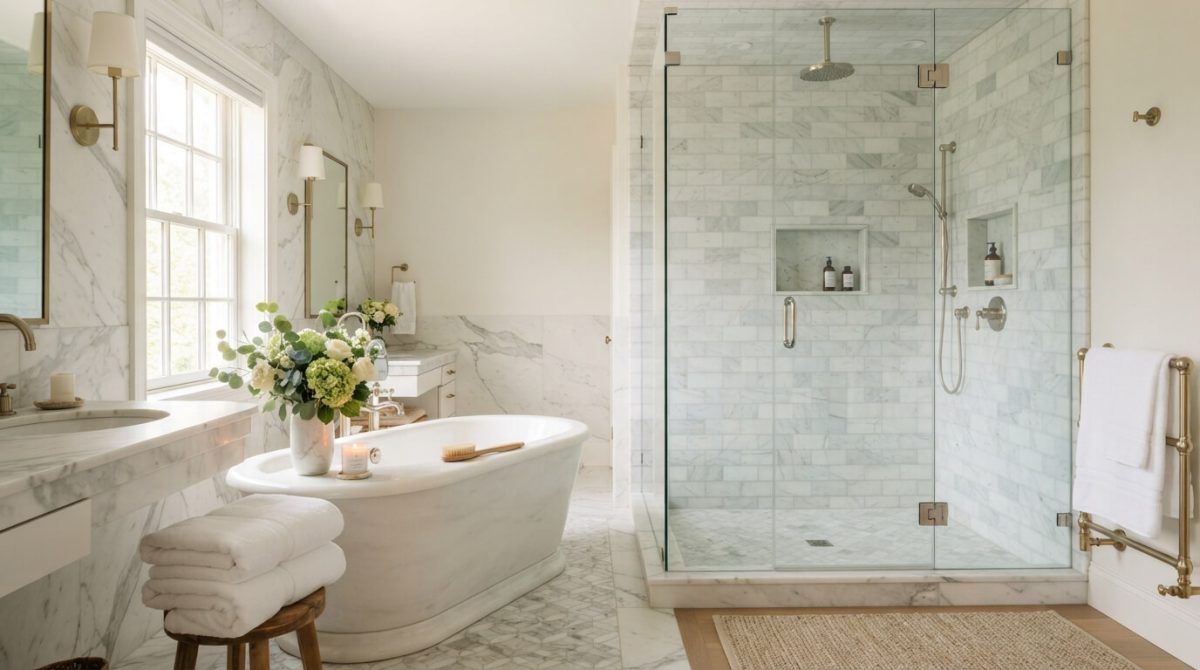
How do you envision the overall look of your bathroom? If you’re aiming for modern elegance, a walk-in shower might be your best bet. Its sleek lines and glass enclosures can create an open, airy feel, making your space look larger.

On the other hand, a classic bathtub offers a timeless, luxurious vibe, perfect for relaxation. You might picture a freestanding tub as a stunning centerpiece, adding character and charm.

Ultimately, your choice reflects your personal style—whether you prefer contemporary minimalism or traditional warmth. Consider how each option complements your bathroom’s overall aesthetic to create a space you love.

Maintenance and Longevity Comparison

When considering maintenance and longevity, walk-in showers often require less upkeep than traditional bathtubs.

With fewer joints and grout lines, they’re easier to clean and less prone to mold and mildew. You won’t need to worry about scratched surfaces or chipped porcelain, either.

On the other hand, bathtubs can accumulate soap scum and hard water stains, requiring regular scrubbing.

With regard to longevity, walk-in showers typically last longer due to durable materials like tile and glass.

Frequently Asked Questions

What Is the Average Cost Difference Between Walk-In Showers and Bathtubs?

Walk-in showers typically cost between $1,200 and $5,000, while bathtubs range from $400 to $3,000.

You’ll find that installation costs can vary, so it’s wise to budget for additional expenses.

How Do Walk-In Showers Affect Home Resale Value in Westchester?

Walk-in showers can boost your home’s resale value, appealing to buyers seeking modern, accessible designs.

They often enhance the overall aesthetic and functionality of bathrooms, making your property more competitive in the Westchester market.

Are There Accessibility Options for Both Walk-In Showers and Bathtubs?

Yes, there’re accessibility options for both walk-in showers and bathtubs.

You can install grab bars, non-slip surfaces, and adjustable showerheads to enhance safety and ease of use, ensuring comfort for everyone in your home.

Can I Install a Walk-In Shower in a Small Bathroom?

Yes, you can install a walk-in shower in a small bathroom.

Opt for compact designs and sliding doors to maximize space.

It’ll create a more open feel while providing functionality and style in your bathroom.

How Long Does Installation Typically Take for Each Option?

Installation typically takes one to two days for a walk-in shower,

while a bathtub may require two to three days.

Your timeline can vary based on the complexity and any additional features you want.

Conclusion

Ultimately, choosing between a walk-in shower and a bathtub for your Westchester home depends on your lifestyle and preferences. If you value convenience and modern design, a walk-in shower might be the way to go. However, if you enjoy relaxing baths or have young kids, a bathtub could be more appealing. Consider your space, maintenance needs, and aesthetic goals to make the best decision for your bathroom. Whichever you choose, make it a space you love!
Categories
Blog

Basement Lighting Ideas That Don’t Make It Feel Like a Cave

To brighten up your basement and avoid that cave-like feel, start with egress windows for natural light and safety. Layer ambient, task, and accent lighting to create warmth and depth. Choose decorative fixtures as art pieces to spark conversation and personalize the space. Smart lighting options help you adjust brightness and set the mood easily. Finally, incorporate mirrors to amplify light and make the area feel more open. Discover more transformative ideas for your basement.

Embrace Natural Light With Egress Windows

When you want to brighten up your basement, consider installing egress windows, as they not only provide natural light but also enhance safety.

These windows allow sunlight to pour in, transforming a dark, cramped space into a welcoming area. You’ll find that they create a more open feel, making your basement perfect for relaxation or entertaining.

Additionally, egress windows meet building codes, ensuring your family’s safety in case of emergencies.

When choosing the right size and style, think about your basement layout and aesthetic.

With egress windows, you’ll enjoy the benefits of both illumination and peace of mind.

Layered Lighting for Depth and Warmth

While egress windows bring in natural light, adding layered lighting can further enhance the ambiance of your basement.

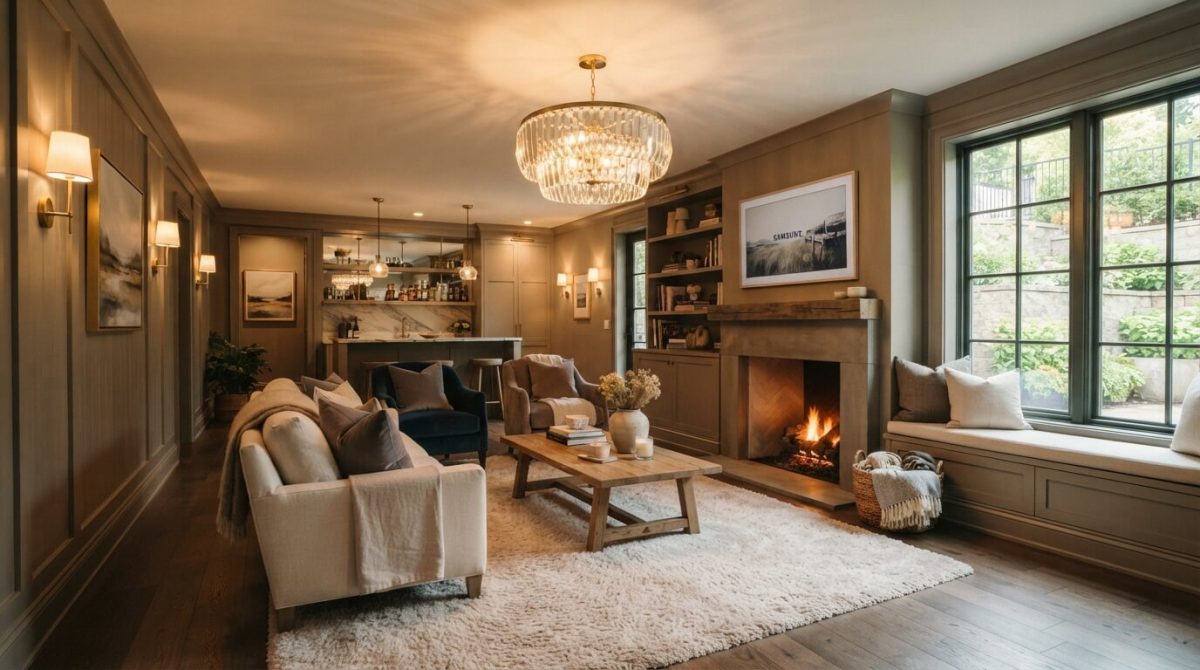
Start with ambient lighting to set a warm tone. Consider recessed lights or ceiling fixtures to provide overall illumination.

Next, incorporate task lighting, like desk lamps or sconces, to brighten specific areas where activities occur.

Finally, add accent lighting to showcase artwork or architectural features.

This combination creates depth and warmth, making your basement feel inviting and cozy.

Decorative Fixtures That Double as Art

Incorporating decorative fixtures that double as art can instantly elevate your basement’s aesthetic.

Think about unique pendant lights or sculptural floor lamps that serve as conversation starters. A striking chandelier can add elegance, while a bold wall sconce can create visual interest.

Choose pieces that reflect your style, whether it’s modern, rustic, or eclectic. You might even consider a colorful statement piece to draw the eye and brighten the space.

Don’t forget to balance functionality with creativity—these fixtures should provide adequate illumination while enhancing the overall ambiance.

Let your lighting choices express your personality and transform your basement into a chic retreat.

Smart Lighting Solutions for Flexibility

After selecting artistic fixtures to enhance your basement’s style, consider how smart lighting solutions can add versatility to your space.

Smart bulbs and dimmers let you customize brightness levels depending on your activities, whether you’re hosting a party or enjoying a movie night. Voice-controlled systems offer convenience, allowing you to adjust lighting without getting up.

Additionally, app-controlled lights can create schedules or scenes, transforming the atmosphere on demand. With color-changing options, you can set the mood for any occasion.

Embrace smart technology to guarantee your basement lighting adapts to your needs, making it a welcoming retreat for everyone.

Use Mirrors to Enhance Brightness and Space

To transform your basement into a brighter and more spacious area, strategically placing mirrors can make a significant difference.

Positioning mirrors across from windows or light sources amplifies natural light, creating an illusion of openness. Use larger mirrors to reflect light and views, while smaller ones can add interest and depth to your decor.

Don’t shy away from experimenting with different shapes and styles; they can enhance your basement’s aesthetic appeal. Additionally, consider using mirrored furniture or accents to further brighten the space.

With these simple changes, you’ll find your basement feels more inviting and less cave-like.

Frequently Asked Questions

What Are the Best Paint Colors for a Bright Basement?

For a bright basement, consider soft whites, light grays, or pale pastels.

These colors reflect light, making your space feel airy and open.

Avoid dark shades; they can absorb light and make the room feel smaller.

How Can I Minimize Shadows in My Basement Lighting?

To minimize shadows in your basement lighting, use multiple light sources at different heights.

Opt for soft white bulbs, and incorporate reflective surfaces.

This way, you’ll create a well-lit, inviting atmosphere without harsh contrasts.

Are There Energy-Efficient Lighting Options for Basements?

Yes, you’ve got energy-efficient options for your basement.

Consider LED lights, which use less electricity and last longer.

Compact fluorescent bulbs also save energy while providing ample light, making your space more inviting and cost-effective.

What Types of Bulbs Are Best for Basement Lighting?

For basement lighting, LED bulbs are your best option.

They’re energy-efficient, long-lasting, and come in various color temperatures to create the right atmosphere.

Consider using dimmable options for added flexibility in brightness levels.

How Can I Create a Cozy Atmosphere in a Basement?

You can create a cozy atmosphere in your basement by using warm-toned lights, adding soft textiles like rugs and cushions, incorporating plants, and utilizing layered lighting to enhance the space’s warmth and inviting feel.

Conclusion

By implementing these basement lighting ideas, you can transform your space from a dark cave into a welcoming retreat. Embrace natural light with egress windows, create depth with layered lighting, and choose decorative fixtures that add artistic flair. Don’t forget smart lighting solutions for versatility and mirrors to boost brightness and the feeling of spaciousness. With these tips, you’ll enjoy a cozy, vibrant basement that invites you to relax and entertain.

Categories
Blog

Bedroom Remodeling Ideas That Improve Comfort and Space

To improve comfort and space in your bedroom, start by maximizing vertical space with shelves and tall furniture. Create a cozy atmosphere with soft lighting and warm colors. Choosing a tranquil color palette and incorporating multi-functional furniture can enhance both functionality and style. Additionally, focus on privacy and sound insulation with thick curtains and plush rugs. If you’re looking for more tips and ideas, there’s plenty more to explore.

Maximizing Vertical Space With Smart Storage Solutions

When you’re short on floor space, maximizing vertical space with smart storage solutions can transform your bedroom into an organized sanctuary.

Consider installing shelves above your bed or desk to hold books, plants, or decorative items. Use tall dressers or multi-tiered carts to take advantage of height while keeping essentials close at hand.

Hooks and pegboards can store accessories and bags, freeing up valuable surfaces. Don’t forget about under-bed storage; it’s perfect for seasonal clothing or extra linens.

Creating a Cozy Atmosphere With Lighting

To create a cozy atmosphere in your bedroom, consider how lighting can greatly influence the mood.

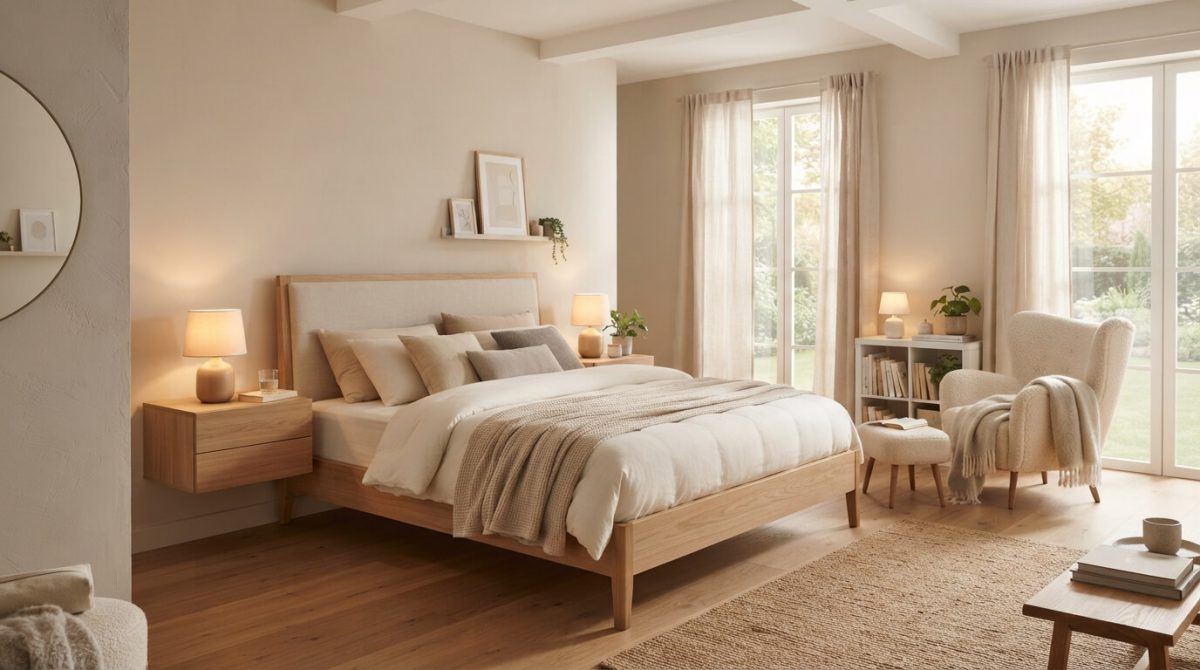
Swap harsh overhead lights for soft, warm lamps that bask your space in inviting glow. Use dimmer switches to adjust brightness according to your needs, making evenings more relaxing.

Incorporate string lights or fairy lights for a whimsical touch that adds warmth. Position bedside lamps for easy access, allowing you to unwind with a book.

Don’t forget candles; their flickering flames can create a serene vibe.

Choosing the Right Color Palette for Serenity

Choosing the right color palette can greatly impact your bedroom’s serenity. Soft, muted tones like pastels or earthy shades create a calming atmosphere, allowing you to unwind.

Consider using light blues, greens, or warm neutrals to evoke a sense of tranquility. You might also incorporate accents of deeper shades to add depth without overwhelming the space.

Experiment with different combinations on a small scale before committing to a full room. Remember, the colors should resonate with you personally, fostering relaxation and comfort.

Ultimately, your chosen palette should invite peace and make your bedroom a true sanctuary.

Incorporating Multi-Functional Furniture

Creating a serene atmosphere in your bedroom isn’t just about color; it’s also about maximizing space with smart furniture choices.

Incorporating multi-functional furniture can transform your room’s functionality and aesthetic. Consider a bed with built-in storage drawers or a nightstand that doubles as a desk. A storage ottoman can provide seating while hiding blankets or books.

Look for a fold-out desk that saves space when not in use. By selecting pieces that serve multiple purposes, you’ll not only declutter your space but also create a more inviting and peaceful environment tailored to your lifestyle.

Embrace creativity in your furniture selection!

Enhancing Privacy and Sound Insulation

While you may love the idea of a cozy retreat, enhancing privacy and sound insulation in your bedroom is essential for truly unwinding.

Start by investing in thick curtains or blackout shades to block out noise and light. You can also add a plush area rug to absorb sound and create a warmer atmosphere.

Consider using soundproofing materials like acoustic panels or insulation in the walls. Rearranging furniture can also help; place your bed against a shared wall to minimize disturbances.

Finally, a white noise machine can work wonders, creating a serene environment that allows you to relax and recharge.

Frequently Asked Questions

What Is the Average Cost of a Bedroom Remodel?

The average cost of a bedroom remodel ranges from $10,000 to $30,000, depending on your choices and location.

You’ll want to factor in materials, labor, and any custom features you’re considering for your space.

How Long Does a Typical Bedroom Remodeling Project Take?

A typical bedroom remodeling project takes about two to four weeks, depending on the scope.

You’ll want to factor in design time, materials availability, and any unexpected delays that might arise during the process.

Can I Remodel My Bedroom Myself, or Should I Hire a Professional?

You can definitely remodel your bedroom yourself if you’ve got the skills and time.

However, hiring a professional guarantees quality and saves you from potential mistakes.

Consider your comfort level and project complexity before deciding.

Are There Any DIY Tips for Maximizing Bedroom Comfort?

To maximize your bedroom comfort, focus on decluttering, adding soft textiles, adjusting lighting, and incorporating plants.

You can also rearrange furniture for better flow and use calming colors to enhance relaxation.

What Are the Latest Bedroom Design Trends for 2024?

In 2024, you’ll see earthy tones, multifunctional furniture, and biophilic designs trending.

Incorporating natural light, minimalist decor, and smart technology will create a cozy, stylish sanctuary that reflects your personal taste and enhances functionality.

Conclusion

By implementing these bedroom remodeling ideas, you can transform your space into a cozy retreat that maximizes comfort and functionality. Embrace smart storage solutions to keep things organized, choose a calming color palette, and create the perfect ambiance with thoughtful lighting. Multi-functional furniture saves space while enhancing usability, and don’t forget to prioritize privacy and sound insulation for a peaceful environment. With these tips, your bedroom will become a serene oasis that truly reflects your style and needs.

Categories
Blog

Designing a Kids Room That Grows With Your Child

Designing a kids’ room that grows with your child means choosing versatile furniture that adapts, like convertible cribs and adjustable desks. Stick to a neutral color palette for a calm backdrop, allowing for easy updates with decor. Incorporate flexible items like removable wall decals and multi-functional pieces. Don’t forget about smart storage solutions to keep things organized. By creating dedicated activity zones, you can foster creativity and independence. You’ll discover more tips to make the most of the space.

Choosing Versatile Furniture

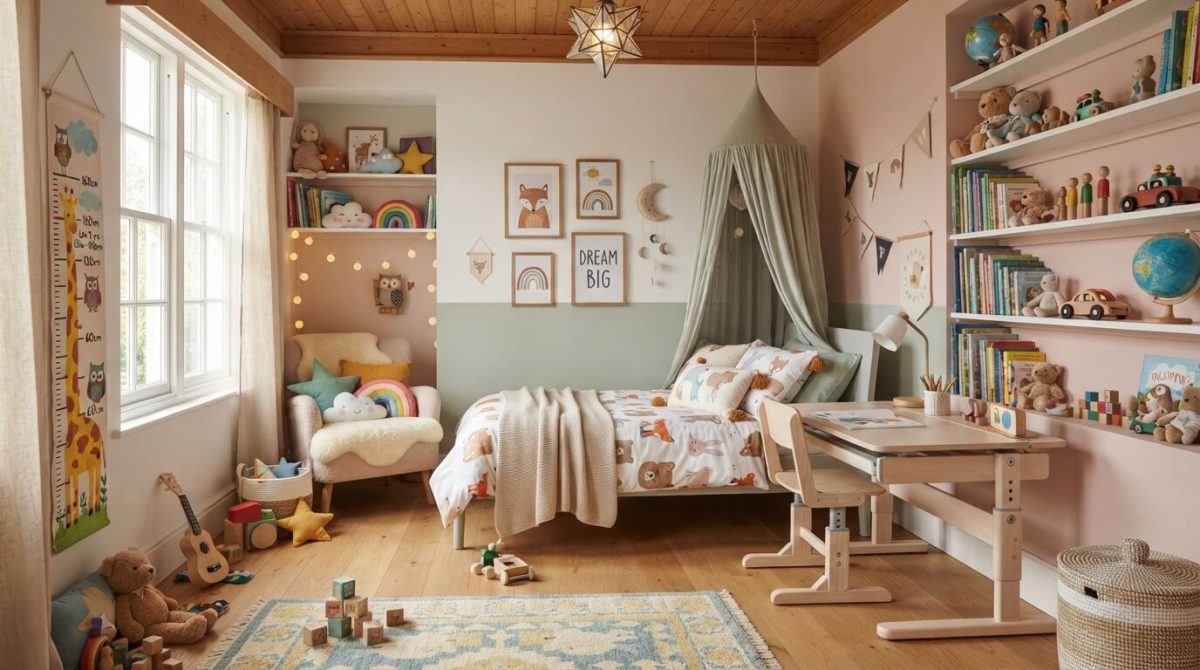
When designing a kids’ room, choosing versatile furniture can make all the difference, as it not only maximizes space but also grows with your child.

Look for items like convertible cribs that turn into toddler beds or desks that can adjust in height. Foldable tables and stackable chairs offer flexibility for playtime and homework.

Consider storage solutions like ottomans that double as seating, keeping clutter at bay. By selecting multi-functional pieces, you’ll guarantee the room adapts to your child’s changing needs, making it a practical and stylish space that lasts through different stages of their life.

Opting for a Neutral Color Palette

A neutral color palette can transform your kids’ room into a calm and inviting space. By choosing soft whites, grays, or earthy tones, you create a versatile backdrop that adapts as your child grows.

These colors promote relaxation and can easily complement various themes and decor styles. You won’t have to repaint every few years; instead, you can simply switch accessories or artwork to refresh the room.

A neutral palette also allows your child’s personality to shine through without overwhelming the senses. Embrace the simplicity and longevity of neutrals to create a timeless environment that evolves with your child.

Incorporating Flexible Decor

Choosing a neutral color palette sets the stage for incorporating flexible decor that can adapt to your child’s changing interests.

Opt for removable wall decals or art that can easily be updated as their tastes evolve. Consider using interchangeable throw pillows or blankets in various patterns, allowing you to refresh the room’s vibe without a complete overhaul.

Multi-functional furniture, like a desk that doubles as a craft table, keeps the space practical.

Finally, incorporate easily changeable accessories, like colorful rugs or themed lamps, so you can quickly switch up the look whenever your child’s interests shift, keeping the room exciting and engaging.

Planning for Storage Solutions

Effective storage solutions are essential for keeping a kids’ room organized and clutter-free.

Start by incorporating multi-functional furniture like beds with built-in drawers or ottomans that double as storage. Use wall-mounted shelves to maximize vertical space for books and toys.

Baskets and bins can help categorize items, making it easy for your child to clean up. Labeling these containers encourages independence in organizing.

Consider a rotating system for seasonal items, allowing you to swap out toys or clothes as your child grows.

Creating Dedicated Activity Zones

While designing a kids’ room, creating dedicated activity zones helps encourage play, learning, and creativity.

Start by dividing the space into areas for various activities, like reading, crafting, and playtime. Use rugs or furniture to define each zone, making it visually appealing and functional.

Consider incorporating a small table for art projects or a cozy corner with cushions for reading. Keep supplies organized and accessible to promote independence.

This way, your child can easily shift between activities, fostering their imagination and skills.

Frequently Asked Questions

How Often Should I Update the Room as My Child Grows?

You should update the room every couple of years, or whenever your child’s interests shift markedly.

Regularly assess their needs and preferences, making adjustments to keep the space functional and enjoyable for them.

What Age Considerations Should I Keep in Mind During Design?

When designing, consider your child’s developmental stages.

Infants need safety and simplicity.

Toddlers crave playfulness, and older kids appreciate personalization.

Anticipate their changing interests and preferences to create a space they’ll love for years.

How Can I Involve My Child in the Design Process?

Involve your child by asking for their input on colors, themes, and furniture.

Let them choose accessories or artwork.

This fosters creativity and guarantees the space reflects their personality, making it more meaningful for them.

Are There Specific Themes That Are Timeless for Kids’ Rooms?

Yes, timeless themes like nature, space, and adventure work great for kids’ rooms.

They inspire creativity and can evolve with your child’s interests, ensuring the space remains appealing as they grow and change.

What Safety Features Should I Include for Younger Children?

You should include safety gates for stairs, corner protectors on furniture, non-toxic materials, secured heavy items, outlet covers, and soft flooring.

Make sure to regularly check for hazards as your child explores their surroundings.

Conclusion

By designing a kids’ room that grows with your child, you’re setting the stage for years of creativity and comfort. Choosing versatile furniture, a neutral color palette, and flexible decor allows the space to adapt as your child’s interests change. With smart storage solutions and dedicated activity zones, you’ll create an inviting environment that fosters both play and study. Embrace this opportunity to make a room that reflects your child’s personality while keeping it functional and fun!